
Irish Driving License Application is Securing a valid permit is an essential milestone for anyone operating motor vehicles on public roads. Whether you are a newcomer, renewing your status, or swapping a foreign credential, the irish driving license application process requires careful attention to detail.
Navigating the driving licence application ireland system can feel daunting without proper preparation. This ireland driving license guide provides a clear roadmap for 2026 to ensure your paperwork remains compliant with national traffic laws.
Learning how to apply for irish driving license correctly helps you avoid common pitfalls and unnecessary processing delays. By following these structured steps, you gain the confidence needed to hit the road legally and safely.
Key Takeaways
- Understand the specific requirements for first-time, renewal, and exchange permits.
- Gather all necessary identification and proof of residency documents early.
- Utilize the official online portal to streamline your submission process.
- Ensure your medical fitness reports meet current national standards.
- Follow the 2026 guidelines to prevent common administrative errors.
Understanding the Irish Driving License System
The foundation of safe motoring in Ireland rests on a structured licensing process. This system ensures that every person behind the wheel possesses the necessary skills and legal authorization to operate a vehicle safely. By maintaining high standards, the government protects all road users.
The Role of the National Driver License Service
The National Driver License Service, commonly known as the ndls, acts as the primary authority for all licensing matters. This organization manages the entire application process, from initial learner permits to full license renewals. Their core mission involves verifying that every applicant meets strict legal criteria before they are granted driving privileges.
When you apply for an irish driving license, the ndls carefully reviews your documentation. They confirm your identity, residency status, and medical fitness to drive. This rigorous verification process is essential to maintain the integrity of the national database and ensure that only qualified individuals receive a permit.
Legal Requirements for Driving on Public Roads
Operating a vehicle on public roads is a significant responsibility that requires full compliance with irish road laws. Drivers must hold a valid permit or license that corresponds to the specific category of vehicle they are operating. Failure to maintain a valid status can lead to severe penalties, including fines or vehicle seizure.
Beyond simply holding a document, you must adhere to the rules of the road at all times. This includes passing mandatory tests and meeting specific eyesight standards to ensure you can react to hazards effectively. Staying informed about irish road laws helps you remain a safe and responsible driver throughout your time on the road.
Eligibility Criteria for Your Irish Driving License Application
Before you can legally operate a vehicle in Ireland, Irish Driving License Application you must satisfy specific regulatory standards. Whether you are a new driver, a long-term resident, or a foreign license holder looking to exchange your credentials, understanding the driving license eligibility Ireland framework is essential. These rules ensure that every road user possesses the necessary legal standing to operate a vehicle safely.
Residency Requirements and Proof of Address
before get the full Irish Driving License Application, To qualify for an Irish permit, you must demonstrate that you are a resident of the country. This means you typically live in Ireland for at least 185 days in each calendar year due to personal or occupational ties. You will be required to provide verifiable documentation to prove your current address during the application process.
“The integrity of the national transport system relies on accurate residency verification for all applicants.”
Acceptable proof of address must be recent and clearly display your name and residential location. Common documents include utility bills, bank statements, or official government correspondence. Ensuring these documents are valid is a core component of the Irish driving license requirements.
Age Restrictions and Vehicle Categories
Age is a primary factor in determining which vehicle categories you are permitted to drive. The law sets specific minimum age limits to ensure that drivers have the maturity required for different types of transport. Below is a summary of the standard age requirements for common vehicle classes.
| Vehicle Category | Description | Minimum Age |
|---|---|---|
| Category AM | Mopeds | 16 Years |
| Category A1 | Light Motorcycles | 16 Years |
| Category B | Standard Cars | 17 Years |
| Category C | Large Trucks | 18 Years |
Meeting these driving licence eligibility Ireland standards is the first step toward your goal. Always verify your specific category needs before submitting your paperwork. Adhering to these irish driving license requirements helps streamline your application and prevents unnecessary delays in the processing cycle.
Preparing Essential Documentation for the NDLS
Navigating the administrative requirements for your driving permit starts with organizing your files. Gathering the correct irish driving license documents is the most critical step in ensuring your application is accepted by the National Driver License Service (NDLS). Proper preparation prevents unnecessary delays and keeps your progress on track.
Verifying Your Identity with a PPS Number
Your Personal Public Service (PPS) number acts as the foundation for your identity verification. You must provide a valid pps number to satisfy the proof of identity Ireland requirements during your visit. This unique identifier allows the system to confirm your residency and legal status accurately.
Without a verified pps number, the National Driver Licence Service cannot process your request. Ensure that your number is clearly visible on official correspondence or your Public Services Card before you begin the submission process.
Accepted Forms of Identification
The ndls requires specific documentation to validate who you are. You should bring original documents rather than photocopies to your appointment. Common accepted forms include a valid passport, a birth certificate, or a current Public Services Card.
If you are using a foreign passport, ensure it is currently valid. Always check the official list of approved documents to avoid rejection at the counter. Having your paperwork in order significantly reduces the time spent at the office.
Photograph and Signature Requirements
Your application requires a high-quality photograph that meets strict standards. The image must be clear, in color, and taken against a plain, light-colored background. You should maintain a neutral expression with your eyes open and clearly visible.
Your signature is equally important for the final ndls record. It must be consistent and legible to ensure it matches your official identification. Following these technical guidelines ensures that your license is produced without any unnecessary errors or quality issues.
Navigating the Learner Permit Process
For many aspiring motorists, the path to independence starts by securing a learner permit in Ireland. This document serves as your official authorization to begin practicing on public roads under specific conditions. Understanding this phase is vital for anyone seeking their first driving license in Ireland.
Applying for Your First Learner Permit
To begin your application, you must first pass the Driver Theory Test. Once you have your certificate, you can submit your application through the National Driver License Service (NDLS). You will need to provide proof of your identity, residency, and the required medical reports if applicable.
The process is designed to be straightforward, provided you have all your documentation ready. Ensure that your personal details match your official records to avoid unnecessary delays. Obtaining your learner permit in Ireland is the foundational step toward becoming a confident and safe driver.
Rules and Restrictions for Learner Drivers
Safety remains the top priority for all new drivers on the road. As a learner, you are legally required to display ‘L’ plates on the front and rear of your vehicle at all times. Furthermore, you must always be accompanied by a person who has held a full driving license in Ireland for at least two years.
You are strictly prohibited from driving on motorways during your learner phase. It is also essential to maintain your vehicle in a roadworthy condition and ensure you have valid insurance. Adhering to these rules helps you build good habits while protecting yourself and other road users.
Progression to a Full Driving License
Transitioning from a learner permit to a full driving license in Ireland requires dedication and practice. You must complete the mandatory Essential Driver Training (EDT) program to gain the necessary skills. This training covers critical aspects of vehicle control and hazard perception.
Once you have gained sufficient experience and met all training requirements, you can book your official driving test. Passing this examination is the final hurdle before you receive your first driving license in Ireland. With patience and consistent practice, you will successfully navigate the road to full driving independence.
Completing the Mandatory Essential Driver Training
Before you can sit for your driving test, you must complete a series of structured lessons known as Essential Driver Training (EDT). This mandatory program is designed to help learner drivers develop the fundamental skills and knowledge required for safe driving on public roads. By participating in these sessions, you build a solid foundation that prepares you for the challenges of modern traffic.
Structure of the EDT Program
The EDT program consists of 12 distinct lessons, each focusing on specific driving competencies. These lessons are designed to be taken in a logical order, ensuring that you master basic vehicle control before moving on to complex traffic scenarios. Consistency is key, as each session builds upon the knowledge gained in the previous one.
Your instructor will guide you through various modules, ranging from basic car control to advanced hazard perception. You are encouraged to practice between these sessions to reinforce your learning. The following table outlines the core focus areas you will encounter during your training:
| Lesson Category | Primary Focus | Skill Level |
|---|---|---|
| Vehicle Familiarization | Controls and Safety | Beginner |
| Traffic Management | Signs and Road Rules | Intermediate |
| Hazard Perception | Anticipation and Reaction | Advanced |
| Eco-Driving | Efficiency and Control | Advanced |
Recording Your Progress in the Logbook
Tracking your development is a vital part of the training process. Every learner is provided with an official logbook where your Approved Driving Instructor (ADI) will record the completion of each lesson. It is your responsibility to ensure that your instructor stamps and signs the relevant sections after every session.
This logbook serves as formal proof of your training and is a strict requirement for booking your practical driving test. Without a fully completed and verified logbook, you will not be permitted to proceed to the final examination. Keep this document in a safe place, as it represents the culmination of your hard work and preparation.
Booking and Passing the Official Irish Driving Test
Successfully navigating the irish driving test is the ultimate requirement for obtaining your full license. This assessment serves as the final hurdle to ensure you possess the necessary skills to operate a vehicle safely on public roads. Proper preparation is essential to building the confidence needed for success.
Scheduling Your Test via the RSA Portal
The Road Safety Authority (RSA) manages all bookings through their dedicated online platform, MyRoadSafety. You must ensure your learner permit is valid before you attempt to book your irish driving test. The portal allows you to select a test center that is convenient for your location and view available time slots in real-time.
Once you select a date, you will need to pay the required fee to confirm your appointment. It is highly recommended to monitor the portal regularly if your preferred center is currently fully booked. Planning ahead helps you secure a slot that aligns with your readiness.
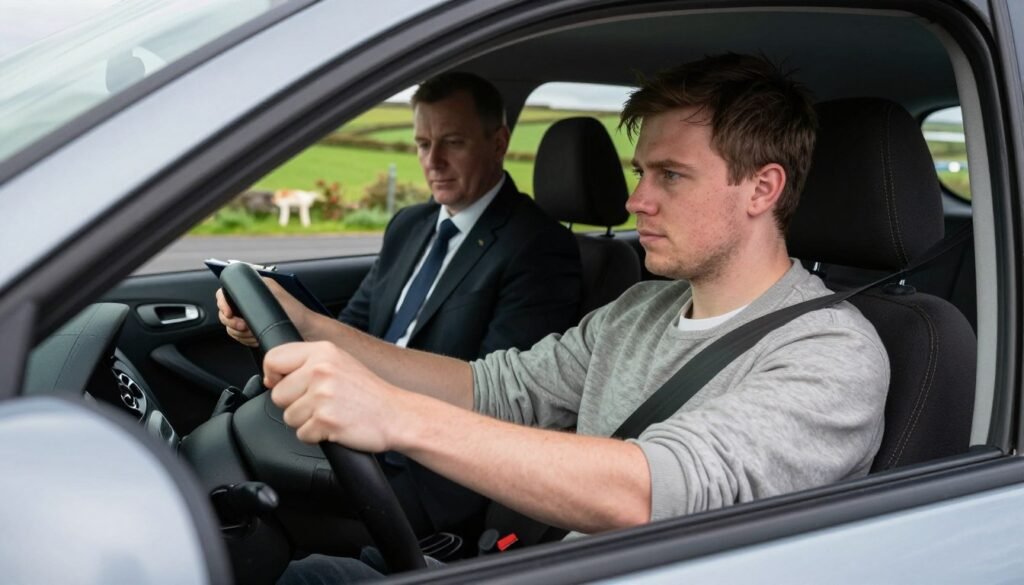
What to Expect During the Practical Examination
The practical examination evaluates your ability to handle a vehicle in various traffic conditions. You will be tested on your knowledge of the Rules of the Road, vehicle safety checks, and your reaction to hazards. The examiner will observe your decision-making skills and your ability to maintain control of the car at all times.
During the drive, you will perform specific maneuvers such as reversing around a corner or a hill start. The entire process is designed to be fair and objective, focusing on your competence as a driver. Staying calm and focused during the irish driving test will significantly improve your chances of a positive outcome.
Common Reasons for Test Failure
Many candidates fail due to preventable errors rather than a lack of driving ability. Frequent mistakes include failing to observe traffic signs, improper lane positioning, and poor mirror usage. These errors often stem from nervousness or a lack of consistent practice in real-world scenarios.
To avoid these pitfalls, ensure you have mastered the basics before your appointment date. Reviewing the official marking criteria can provide clarity on what the examiner expects to see. By addressing these common issues, you can approach your irish driving test with the preparation required to pass on your first attempt.
Exchanging a Foreign Driving License for an Irish One
Understanding the process to exchange foreign driving license Ireland is essential for new residents who plan to operate a vehicle. Holding a valid Irish license ensures you comply with local traffic laws and insurance requirements. Fortunately, many drivers can transition their existing credentials without the need to sit for a new practical driving test.
Recognized Countries and Exchange Agreements
Ireland maintains reciprocal agreements with several countries to simplify the transition for international drivers. If your license was issued by an EU or EEA member state, you are generally permitted to drive in Ireland using your current document. However, you may choose to voluntarily exchange it for an Irish version to simplify administrative tasks.
For drivers from countries outside the EU/EEA, the situation depends on whether a specific exchange agreement exists. Ireland has established formal arrangements with nations such as Australia, Canada, and South Africa, among others. These agreements allow eligible holders to exchange foreign driving license Ireland credentials directly, provided the license is current and valid.
| License Origin | Exchange Eligibility | Test Required |
|---|---|---|
| EU/EEA Member States | Full Recognition | No |
| Recognized Agreement Countries | Direct Exchange | No |
| Non-Recognized Countries | Not Eligible | Yes |
Steps for Non-EU/EEA License Holders
If you hold a license from a country without a reciprocal agreement, you must follow the standard path to obtain an Irish permit. This process typically involves applying for a learner permit and completing the mandatory training requirements. You will need to demonstrate your driving proficiency through the official test to exchange foreign driving license Ireland requirements for a full license.
For those from recognized countries, the application process is much more streamlined. You must visit an NDLS center in person to submit your application, provide proof of residency, and surrender your original foreign license. Always ensure your documentation is complete to avoid unnecessary delays during your appointment.
Medical and Eyesight Report Requirements
Maintaining high safety standards on Irish roads begins with a thorough assessment of your physical and visual health. While most applicants simply declare their fitness, some individuals must provide formal documentation to ensure they can operate a vehicle safely. These assessments help protect both the driver and the public by identifying potential risks early.
When a Medical Report is Mandatory
A medical report is required for specific groups of drivers to confirm they are fit to drive. You must submit this documentation if you are aged 70 or older, or if you are applying for certain commercial vehicle categories. Furthermore, if you have a history of specific health conditions, such as epilepsy, diabetes, or heart disease, a doctor must verify your stability.
Your doctor will complete the official form based on a physical examination. It is essential to ensure that all sections are filled out accurately to avoid delays in your application. This report serves as a professional guarantee that your health status does not pose a danger to other road users.
“The integrity of the licensing system relies on the accurate reporting of health conditions, as clear vision and physical alertness are the cornerstones of responsible driving.”
Standards for Eyesight Certification
Clear vision is a non-negotiable requirement for obtaining a driving license. If you cannot meet the standard vision requirements during your application, you must submit a formal eyesight report completed by a registered optician or doctor. This ensures that your depth perception and field of vision are sufficient for navigating traffic safely.
If you require glasses or contact lenses to meet these standards, you must wear them every time you drive. Your license will be updated to reflect this condition, which is a legal requirement. Failure to comply with these vision standards can lead to the rejection of your application or even legal consequences if you are involved in an incident.
| Requirement Type | Who Needs It | Key Focus |
|---|---|---|
| Medical Report | Drivers 70+ or with health conditions | Physical fitness and stability |
| Eyesight Report | Drivers with vision concerns | Visual acuity and field of view |
| Corrective Lenses | Drivers needing vision aid | Mandatory use while driving |
Submitting Your Online Driving License Application
You can now complete your entire driving license application Ireland process from the comfort of your home. Choosing the digital route is the most efficient way to manage your Irish driving license application without visiting a physical office. This modern approach saves time and ensures your data is processed with high accuracy.
Using the MyGovID Portal
To begin, you must use your MyGovID account to access the secure portal. This digital identity service verifies your credentials, ensuring that your online driving license application remains protected throughout the submission process. Once logged in, the system guides you through each required field to help you successfully apply for Irish driving license requirements.

Ensure you have all your supporting documents scanned and ready before you start the session. The portal allows you to save your progress, meaning you do not have to finish the entire form in one sitting. Double-check all entered information before hitting the final submit button to avoid unnecessary delays.
Tracking Your Application Status
After you submit your request, the portal provides a convenient way to monitor your progress. You can log back into your account at any time to view the current stage of your document issuance. This transparency helps you stay informed about when your new card will arrive.
If the system requires additional information or clarification, you will receive notifications directly through your dashboard. Staying proactive by checking your status regularly ensures that you can address any issues immediately. This streamlined tracking system is designed to keep you updated until your license is officially issued.
Understanding Processing Times and Fees
Managing your expectations regarding Irish driving license fees and the typical Irish driving license processing time is essential for a smooth application experience. Proper preparation allows you to budget effectively and plan your driving schedule without unnecessary surprises.
Current Fee Structure for 2026
The costs associated with obtaining or renewing your permit depend on the type of service you require. Fees are standardized across the country to ensure transparency for all applicants. You can pay these charges securely through the official online portal using a valid credit or debit card.
| Service Type | Validity Period | Standard Fee |
|---|---|---|
| First Learner Permit | 2 Years | €35.00 |
| Full Driving License | 10 Years | €55.00 |
| Replacement License | N/A | €35.00 |
| Medical/Eyesight Update | N/A | €0.00 |
Factors Influencing Processing Delays
While most applications are handled efficiently, several variables can impact the irish driving licence processing time. High seasonal demand often leads to longer wait periods, especially during peak summer months. Ensuring your documentation is complete and accurate is the best way to avoid administrative bottlenecks.
Incomplete applications or missing medical reports are common reasons for unexpected delays. If the authorities require further verification of your identity or residency, the review process will naturally take longer. Double-checking your submission before clicking the final button helps keep your application moving through the system as quickly as possible.
Renewing Your Existing Irish Driving License
Ensuring your driving status remains valid is a critical responsibility for every motorist. Keeping your Irish driving license current is a legal obligation that prevents unnecessary complications while operating a vehicle on public roads. By staying informed about your expiration dates, you can maintain your driving privileges without any interruptions.
When to Initiate the Renewal Process
You should begin the irish driving licence renewal process well before your current card expires. It is generally recommended to submit your application at least three months in advance to account for any potential processing delays. Failing to act in time may result in a period where you are legally unable to drive.
“Driving is a privilege that comes with the responsibility of maintaining valid documentation at all times. Proactive renewal is the best way to ensure you remain compliant with national transport regulations.”
Updating Personal Details During Renewal
The renewal period serves as the perfect opportunity to update your personal information. If you have moved to a new residence or legally changed your name, you must provide the relevant documentation to the National Driver License Service. Updating these details ensures that your records remain accurate and that official correspondence reaches you promptly.
When you decide to renew Irish driving license credentials, ensure you have your current PPS number and proof of address ready. The following table outlines the key considerations for your application:
| Renewal Category | Recommended Action | Required Documentation |
|---|---|---|
| Standard Renewal | Apply 3 months early | Current license, PPS number |
| Change of Address | Update during renewal | Proof of new address |
| Name Change | Submit legal proof | Marriage cert or deed poll |
| Medical Renewal | Consult your GP | Medical report form |
Taking these steps to renew irish driving licence documents will keep you on the road legally. Always verify that your information is correct before finalizing your submission to avoid processing errors.
Conclusion
Securing your driving privileges in Ireland requires a commitment to accuracy and preparation. You now possess the knowledge to navigate the National Driver License Service requirements with confidence.
Keep your documentation organized to streamline every interaction with the Road Safety Authority. Staying informed about current regulations protects your status as a legal road user.
Check the official NDLS website regularly for updates on policy changes or fee adjustments. This proactive approach ensures your driving records remain current and valid.
Share your experiences with the application process to help others in your community. Your feedback provides valuable insights for new drivers starting their own path toward obtaining a license.
Safe driving habits begin with a solid understanding of the rules. Apply these insights to enjoy a smooth and successful experience on Irish roads.
[…] Ireland, it can be especially helpful to budget for guidance as well as driving time. Rules around permit applications, license exchanges, eligibility, documentation, and previous driving history can be confusing. […]
[…] a successful practical test, your next step is the full Irish driving license application. Keep your learner permit and pass certificate details available, and apply within the allowed […]